What is Off-Plan Property in Dubai?

What is Off-Plan Property in Dubai? A Complete and Detailed Guide (2026)

Dubai’s real estate sector has emerged as one of the fastest growing property markets in the world over the past two decades. In 2026, Dubai is the center of attention for global investors not only for housing but also for investment. One of the most frequently heard terms in this market is off-plan property.

Many new investors ask what is off-plan property? Is it safe? And can investing in off-plan property be profitable in 2026? In this detailed guide, we will provide clear and comprehensive answers to all these questions.

Definition of Off-Plan Property

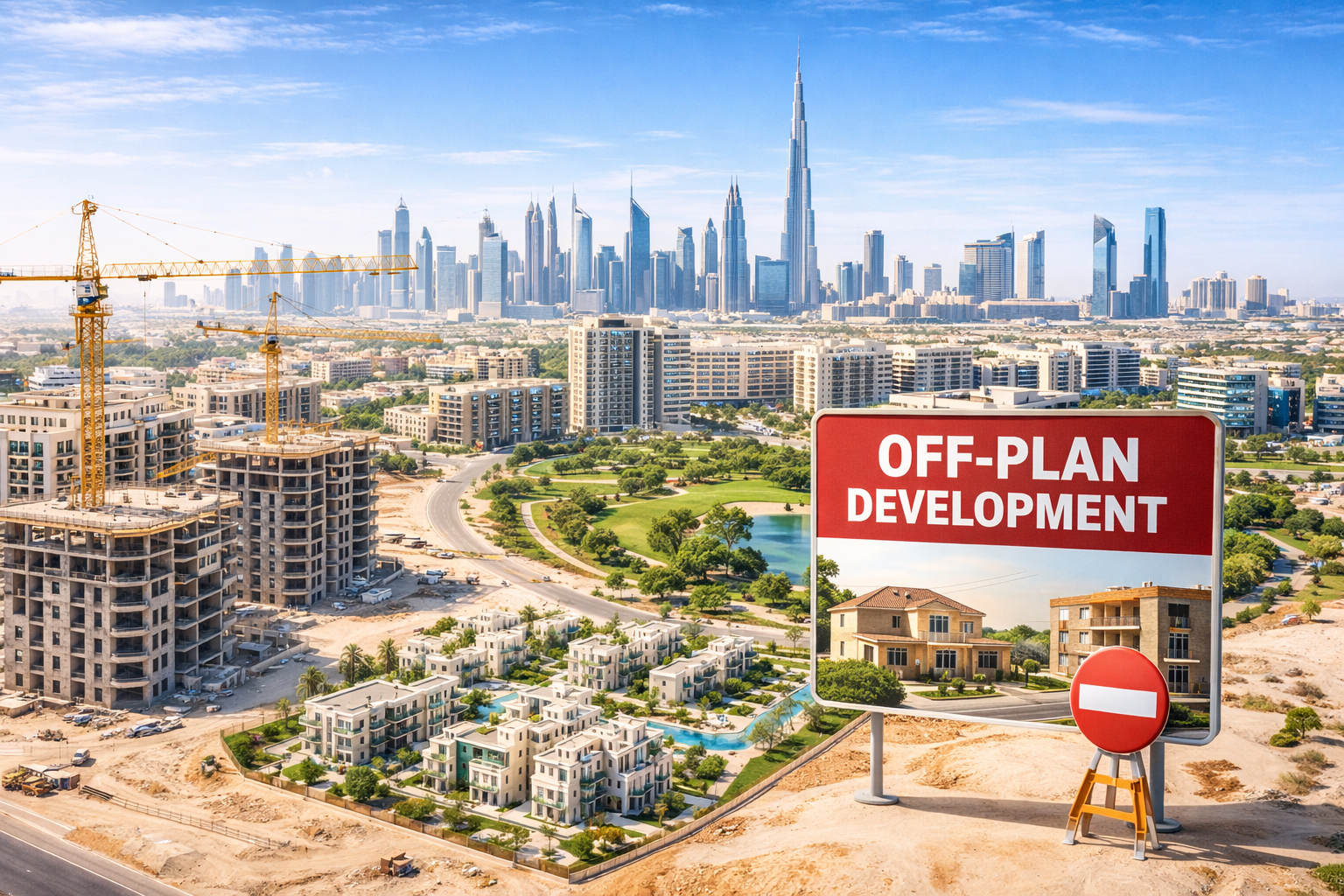
Off-plan property refers to a property that is currently under construction or is only in the form of a project. This type of property is purchased by the buyer before construction is complete. Off-plan property in Dubai is usually sold by registered developers, and its complete legal framework is under the Dubai Land Department (DLD) and RERA.

How does off-plan property work in Dubai?

When an investor buys an off-plan property, they enter into an agreement with the developer for a fixed price. After that:

  • The buyer pays an initial down payment
  • The remaining amount is paid in easy installments
  • Payments are linked to the construction stages
  • The property is handed over to the buyer upon completion

Escrow Account system is mandatory for all off-plan projects in Dubai, through which the buyer’s money is protected.

Key benefits of buying off-plan property

1. Entry at a lower price

Off-plan property is usually available at a lower price than completed (ready) properties, making it easier for new investors to enter the market.

2. Flexible Payment Plans

In 2026, Dubai developers are offering long-term and easy payment plans, sometimes including installments even after handover.

3. Capital Appreciation

The value of the property can increase by the time the construction is completed, which can make the investor a good profit in the future.

4. Modern Amenities and Design

Off-plan projects are introduced with modern architecture, new technology and modern lifestyle amenities.

A brief comparison of off-plan and ready property

  • Off-plan property is cheaper in price
  • Ready property is suitable for immediate occupancy or rental
  • Off-plan is easy to pay
  • Ready property is possible to generate immediate income

Both have their own advantages, but off-plan property is considered more popular for long-term investment.

Popular Off-Plan Locations in Dubai (2026)

Here are some of the prominent off-plan investment areas in Dubai in 2026:

  • Dubai Marina
  • Downtown Dubai
  • Dubai Hills Estate
  • Jumeirah Village Circle (JVC)
  • Business Bay

All these areas are known for their strong infrastructure and high rental income.

Potential Risks and How to Avoid Them

Construction Delays

Sometimes projects can get delayed from the scheduled time. For this, it is important to choose a reliable developer.

Market Fluctuations

Prices in the property market can go up or down, so it is important to adopt a long-term strategy.

Choosing a Developer

Always choose a RERA-registered and experienced developer.

Who is off-plan property suitable for in 2026?

  • Long-term investors
  • First-time property buyers
  • Buyers of property in Dubai with a limited budget
  • People looking to make a profit from future rentals or sales

Off-plan properties and Golden Visa

There are several off-plan properties that may qualify for the UAE Golden Visa at a certain value, provided that the rules and conditions are met.

Frequently Asked Questions (FAQs)

Can foreigners buy off-plan properties in Dubai?

Yes, foreign investors in Dubai can buy off-plan properties in certain freehold areas.

Is off-plan property safe?

If the property is RERA registered and under an Escrow Account, it is considered relatively safe.

What is the minimum budget?

The budget may vary according to the location and project, however, off-plan properties are available at a lower budget.


Dubai’s off-plan property market in 2026 offers numerous investment opportunities. With proper research, a suitable location, and the selection of a reliable developer, off-plan property can be a safe and profitable investment. If you are looking for long-term benefits, seriously considering off-plan property can be a wise decision.

Dubai Mortgage Guide 2026 – Home Loan Rules, Interest Rates and Eligibility

Not every buyer needs to have a full amount of money to buy a property in Dubai. That is why mortgages play a vital role in Dubai’s real estate sector. In 2026, Dubai banks and financial institutions are offering mortgage facilities to both local and foreign buyers. In this blog, we will explain the rules, eligibility, interest rates and complete procedure for Dubai mortgages.

What is a mortgage in Dubai?

A mortgage is a loan that a bank or financial institution provides to purchase a property, which is repaid over a fixed period and with a fixed interest rate. The property itself remains with the bank as collateral during the mortgage.

Who can qualify for a mortgage?

The following individuals may be eligible for a mortgage in Dubai in 2026:

  • UAE residents
  • Salaried or business owner
  • Minimum salary as per bank policy
  • Valid residency visa
  • Foreign investor
  • Passport and income proof
  • Higher down payment requirement
  • Specific conditions of some banks

Down payment for mortgage in Dubai

As per Dubai Land Department rules:

UAE residents: Minimum 20% down payment

Non-residents: Minimum 30% to 40% down payment

Expected interest rates in 2026

Mortgage interest rates in Dubai generally fall into the following categories:

  • Fixed rate mortgage
  • Variable rate mortgage

The interest rate depends on the bank, loan tenure and market conditions.

Islamic Mortgage vs. Conventional Mortgage

Islamic Mortgage:

  • Principle of profit instead of interest
  • Sharia compliant

Conventional Mortgage:

  • Fixed or variable interest
  • Availability of more banks

Both options are legal and available in Dubai.

Step-by-step guide to getting a mortgage

  1. Choosing a bank or mortgage broker
  2. Pre-approval
  3. Choosing a property
  4. Property valuation
  5. Final approval and contract
  6. Registration with Dubai Land Department
  7. Mortgage fees and charges
  8. Processing fees
  9. Valuation fees
  10. Registration fees
  11. Insurance charges

Advice for first-time buyers

  • Set a realistic budget
  • Compare bank offers
  • Read all terms carefully

Advantages of a mortgage in Dubai

  • No need to pay the full amount at once
  • Financial flexibility
  • Immediate ownership of the property

Potential risks

  • Increasing interest rates
  • Penalties for late payment
  • Financial stress


Buying property in Dubai through a mortgage is a practical and popular option in 2026 With proper planning, choosing a reputable bank, and a thorough understanding of the rules, a mortgage can make your investment successful.

Dubai Property Payment Plans Explained (2026 Guide)

Dubai’s property market has become an attractive opportunity for investors from all over the world. In 2026, Dubai real estate developers are providing buyers with easy and flexible payment plans, thanks to which even people with a low budget have been able to buy property in Dubai. In this blog, we will explain in detail the different property payment plans in Dubai, their advantages, disadvantages and the best options for investment.

What is a Dubai Property Payment Plan?

A payment plan refers to the mechanism under which the buyer pays for the property in installments instead of paying the entire amount at once. This facility is very popular in Dubai, especially for off-plan properties.

Types of Common Property Payment Plans in Dubai

1. Off-Plan Payment Plan

This plan is for under-construction properties.

  • Usually 10% to 20% down payment
  • Installments during construction
  • Balance amount on completion of the property

Benefits:

  • Low initial investment
  • Potential for price appreciation
  • Easy installments

2. Post Handover Payment Plan

In this plan, the buyer pays installments even after acquiring the property.

Benefits:

  • Opportunity to pay installments from rent
  • Less financial pressure

3. Ready Property Payment Plan

  • This is for a completed property.
  • Usually 100% or short-term payment

Some developers also offer short-term installments

Popular payment plan structures in 2026

  • 20/80 Plan: 20% booking, 80% on handover
  • 50/50 Plan: Equal payments during construction and on handover
  • 60/40 Post Handover Plan: 40% installments after handover

Payment plan facilities for foreign investors

  • Foreigners in Dubai also have the same payment plan facilities as locals.
  • No specific nationality restrictions
  • Legal protection under the Dubai Land Department

What to consider when choosing a payment plan?

  • Developer Reputation and Past Projects
  • Total Property Cost
  • Service Charges and Other Fees
  • Investment Purpose (Residential or Rental)

Benefits of Payment Plans in Dubai

  • Starting with Low Capital
  • Easy Financial Planning
  • Potential for Better Return on Investment

Potential Disadvantages

  • Late Completion of Projects
  • Additional Charges
  • Market Risk

Is Buying Property on a Payment Plan Worth It?

If done with proper research and investing with a reputable developer, buying property on a payment plan can be a great decision in 2026, especially for new investors.


Dubai property payment plans are making investing in 2026 more convenient and accessible. Whether you are a first-time investor or an experienced investor, choosing the right payment plan can play a significant role in your returns.

Dubai Tenancy Laws 2026 – A Complete Guide for Both Landlords and Tenants

Dubai’s rental market operates under a highly regulated and legal framework. Whether you are a property owner or a tenant, it is essential to understand Dubai’s tenancy laws. The laws that came into effect in 2026 clearly define the rights and responsibilities of both landlords and tenants, reducing the chances of disputes. This guide explains in detail all the important laws and regulations related to tenancy in Dubai.

Legal System of Tenancy in Dubai

Tenancy matters in Dubai are regulated under the Real Estate Regulatory Agency (RERA) and the Dubai Land Department (DLD). All tenancy agreements must be registered in the Ejari system.

What is Ejari?

The lease is a government registration system that:

  • Legalizes the rental agreement
  • Protects the rights of the landlord and tenant
  • Provides legal evidence in case of disputes

No rental agreement is legally recognized without a lease.

Landlord Rights

According to Dubai law, the landlord has the following rights:

  • To collect rent on time
  • To use the property in accordance with the terms of the contract
  • To vacate the property upon termination of the contract (with legal notice)
  • To increase the rent within the prescribed limits

Tenant Rights

The tenant also has full protection under Dubai law:

  • Protection from illegal eviction
  • No increase in rent without proper notice
  • Right to proper maintenance of the property
  • Stability during the term of the contract

When and how can rent be increased?

To increase rent in 2026:

  • At least 90 days’ notice must be given before the contract ends
  • The increase must be in accordance with the RERA rent calculator
  • Increases above the market rate are considered illegal

Termination rules

Both the landlord or tenant must:

  • Give written notice
  • The notice period is usually 90 days

The contract cannot be terminated immediately without cause

How are Dubai rental disputes resolved?

If a dispute arises:

  • The matter is registered with the Rental Dispute Settlement Centre (RDSC)
  • The court proceedings are relatively fast and transparent
  • The decisions are legally enforceable

Important advice for tenants

  • Always complete the lease registration
  • Read all the terms carefully before signing the agreement
  • Keep a complete record of payments

Important advice for landlords

  • Do not take any action without legal notice
  • Use a RERA calculator before increasing the rent
  • Keep all transactions in writing and documented

Dubai rental market trends in 2026

In Dubai in 2026:

  • Rental demand expected to remain strong
  • Increased population growth to further stabilize the rental market
  • Better opportunities for long-term rental investment

Tenancy laws in Dubai in 2026 are clear, fair and Are safe. If the rules are followed correctly, both rental investment or residence can be peaceful and profitable.

Golden Visa through Property in Dubai – Complete Guide (2026) Introduction

Dubai not only offers great investment opportunities but also long-term residency to foreign investors. The Dubai Golden Visa program is a great facility for those who want to stay in Dubai for a long time by purchasing property. This guide will inform you about all the rules, conditions and benefits of getting a Golden Visa through Property in Dubai for 2026.

What is the Dubai Golden Visa?

The Golden Visa is a long-term residency visa introduced by the United Arab Emirates, which is usually issued for 5 or 10 years. This visa is given to investors, businessmen, professionals and property owners.

Types of Golden Visa for Property Investors

  • 10-Year Golden Visa
  • Property worth at least AED 2 million
  • Complete or off-plan property (from an approved developer)
  • Property can consist of one or more units
  • 5-Year Residence Visa
  • Subject to specific investment conditions
    Sometimes available under retirement or long-term residence schemes

Types of property eligible for Golden Visa

  • Residential apartments
  • Villas and townhouses
  • Property located in freehold areas
  • Property registered with the Dubai Land Department (DLD)

⚠️ Note: Properties rented or with a small share in shared ownership are generally not eligible.

Step-by-step guide to getting a Golden Visa

Step 1: Property Purchase

  • Buy a property in an approved freehold area
  • Meet the minimum required value

Step 2: Verification of ownership

  • Obtain a title deed from the Dubai Land Department

Step 3: Visa Application

  • Submit an application through the Dubai REST app or relevant government centers

Step 4: Medical Examination and Biometrics

  • Biometric verification for medical tests and Emirates ID

Step 5: Visa Approval

  • Upon approval, a 5 or 10-year visa is issued

Key Benefits of a Golden Visa

  • Long-term residency (no need for repeated visas)
  • Facility to sponsor family members
  • Ease of opening a business and bank accounts
  • Access to housing, education and healthcare facilities in Dubai
  • Strong global residency status

Can a Golden Visa also be obtained on off-plan property?

Yes, provided that:

  • The total value of the property reaches the required threshold
  • The developer is approved by the Dubai Land Department
  • The specified portion of the payment has been completed

Does the Golden Visa grant permanent citizenship?

No. The Golden Visa does not grant citizenship but rather long-term residency. However, it provides a solid foundation for a permanent lifestyle in Dubai.

Is it worth getting a Golden Visa in 2026?

Due to the strength of Dubai’s economy, infrastructure and real estate market in 2026:

  • Golden Visa is highly attractive to investors
  • Property value and residential convenience are both available
  • A great opportunity for long-term planning

Important precautions

  • Always deal with approved real estate agents
  • Verify legal documents
  • Get up-to-date information from government websites or the Dubai Land Department

Obtaining a Golden Visa through property in Dubai is a safe, legal and beneficial decision in 2026. If you are looking for long-term residence in Dubai along with investment, then the Golden Visa program offers the best opportunity for you.

Dubai Property Price Forecast 2026 – What Investors Should Expect

Dubai’s real estate market has shown exceptional strength and growth over the past few years. As 2026 approaches, investors, end-users and overseas buyers are keen to know where property prices are headed and whether investing now is the right time to do so. This guide provides a detailed Dubai property price forecast for 2026, based on market trends, demand factors, government policies and economic indicators.

Dubai Property Market Performance Review

Dubai’s property market has seen various phases of reform and development over the past decade. Prices have been steadily increasing since 2022, driven by:

  • Strong foreign investment
  • High rental demand
  • Population growth
  • Long-term housing reforms

From 2024–2025, both premium areas and lower-priced communities saw price increases, setting a strong foundation for 2026.

Key factors influencing Dubai property prices in 2026

1. Population growth and housing reforms

Dubai is attracting professionals, business people and retirees through the following facilities:

  • Golden Visa Program
  • Retirement Visa
  • Remote Work Visa

Population growth directly increases the demand for residential properties, especially apartments and townhouses.

2. Foreign investment and global confidence

Dubai is one of the most investor-friendly real estate markets globally. Factors supporting price appreciation include:

  • 100% foreign ownership in certain areas
  • No property tax
  • No capital gains tax
  • Stable political and economic environment

This continued international interest is expected to support price stability and appreciation in 2026.

3. Infrastructure Development

Major infrastructure projects such as:

  • Metro expansion
  • New highways
  • Smart city projects

Continue to enhance accessibility and property values ​​in emerging communities.

4. Supply and Demand Balance

While new projects are introduced every year, developers are now adopting a more cautious and demand-driven strategy. Limited supply has historically helped the market avoid severe corrections.

Expected price trends by property type

  • Apartments
  • Mid-range prices expected to increase (5%–8%)
  • Strong demand in areas such as Dubai Marina, Downtown Dubai, JVC and Business Bay
  • Higher transactions expected in lower-priced apartments
  • Villas and townhouses
  • Higher growth potential (8%–12%)

Family communities such as Dubai Hills Estate, Arabian Ranches and Demik Hills are becoming more popular

Limited supply supports long-term appreciation

  • Luxury properties
  • Steady to strong growth in premium areas
  • Palm Jumeirah and coastal properties expected to outperform the market
  • High demand from global affluent buyers

Top performing areas in 2026

  • Dubai Marina – Strong rental yields and resale demand
  • Downtown Dubai – Premium prices and long-term value
  • Business Bay – Mixed-use development and investor interest
  • Dubai Hills Estate – Family Housing and Investment Growth
  • Jumeirah Village Circle (JVC) – Low Entry Cost and High ROI

The Future of the Rental Market

Rent prices are expected to remain strong in 2026, driven by the following:

  • Increasing population
  • High cost of home ownership for short-term residents
  • Increasing demand for tourism and short-term rentals
  • This situation makes Dubai an attractive rental investment.

Is 2026 a good time to invest in Dubai property?

For long-term investors, 2026 offers the following opportunities:

  • Stable price growth
  • Strong rental income
  • Low-risk regulatory environment

Early investments in emerging communities can yield better returns over the next 5–10 years.

Potential Risks

Despite the positive trend, investors should be aware of the following:

  • Global economic slowdown
  • Interest rate volatility
  • Over-borrowing

Proper research and professional advice are always essential.

Dubai’s property market is forecast to remain stable, investor-friendly and growth-oriented in 2026. While the pace of rapid price increases may slow, steady growth, strong rental income and a long-term economic outlook make Dubai one of the best real estate markets in the world.

Whether you’re a first-time buyer or a seasoned investor, 2026 offers strong opportunities—especially for those who invest strategically and for the long term.

Rental Yield in Dubai: Best Areas for High ROI in 2026

Dubai’s real estate market is not just about capital appreciation, it also offers attractive rental yields for investors. Understanding rental yields is essential for investors to maximize their returns and choose the best areas to invest in.

What is rental yield?

Rental yield is the percentage that represents the annual rental income compared to the purchase price of a property.

Formula:

Rental Yield (%)=Annual Rent/Property Price×100

For example, if a property is priced at AED 1,000,000 and yields an annual rent of AED 80,000, the rental yield will be:

80,000/1,000,000×100=8%

Average Rental Yield in Dubai (2026)

Dubai offers competitive rental yields compared to global cities:

Apartments: 6–8%

Villas/Townhouses: 4–6%

Luxury Properties: 3–5%

Rental yields depend on location, property type and It depends on the amenities.

Best areas for high rental yields

Investors should target areas where rental demand is high and property prices are reasonable to maximize ROI. Some of the high-performing areas are as follows:

1. Dubai Marina

Type: Apartments

Average rental yield: 7–8%

Popular with professionals and expatriates. Great for both short-term and long-term rental demand.

2. Jumeirah Village Circle (JVC)

Type: Apartments and villas

Average rental yield: 7%

Family-friendly community, reasonable prices, and growing rental demand.

3. Business Bay

Type: Apartments

Average rental yield: 6–7%

Central location, close to Downtown Dubai and job centers. Strong rental demand for professionals.

4. Dubai Silicon Oasis (DSO)

Type: Apartments and villas

Average rental yield: 7–8%

Affordable prices, steady rental demand from mid-income tenants.

5. International City

Type: Apartments

Average rental yield: 8–9%

Very high rental yield, due to low property prices, and strong demand from expats.

Tips for maximizing rental yield

Buy in high-demand areas: Focus on areas where there is strong tenant demand.

Consider the nature of the property: Apartments generally offer higher rental yields than villas.

Short-term rentals: Consider vacation rentals or Airbnb rentals, especially in tourist areas.

Invest in off-plan properties: Sometimes offer better value appreciation and initial rental income potential.

Calculate total costs: Include DLD fees, agent commissions, and service charges in the ROI calculation.

Factors that affect rental yields

Location: Proximity to metro, business centers, schools, and malls

Amenities: Pool, gym, parking, and security drive rental demand

Age of the property: Newer properties generally command higher rents but service charges can also be higher

Market trends: Keep an eye on supply and demand dynamics and upcoming projects

Dubai offers high rental yields compared to global standards, making it a lucrative market for investors. By understanding the right area, property type, and market dynamics, investors can maximize their ROI and benefit from Dubai’s active rental market.

Best Areas to Buy Property in Dubai for Long-Term Investment (2026 Guide)

Dubai has consistently been ranked among the world’s best real estate investment destinations, primarily due to its tax-free environment, robust infrastructure, investor-friendly laws, and high demand for rental properties.
For investors looking to make long-term property investments in Dubai, choosing the right area is the most important decision.

In this guide, we will explore the best areas for long-term investment in Dubai in 2026, which offer the potential for capital appreciation, steady rental income, lifestyle appeal, and future growth.

Why is long-term property investment in Dubai profitable?

Long-term investors enjoy the following benefits in Dubai:

  • No property tax and capital gains tax
  • A stable dirham pegged to the US dollar
  • A growing population and foreign workforce
  • Continuous infrastructure development by the government
  • A strong tourism and business environment

All these factors ensure a steady demand for residential and rental properties.

1. Dubai Marina

Dubai Marina is one of the most sought-after areas for long-term investment.

Why invest here:

  • Waterfront lifestyle and high rental demand
  • Popular among professionals and tourists
  • Strong resale value
  • Excellent connectivity via metro and roads

Best property types:
Apartments (1-bed and 2-bed units)

Suitable for investors:
Rental income + capital appreciation

2. Downtown Dubai

Home to the Burj Khalifa and The Dubai Mall, Downtown Dubai offers premium properties with long-term value.

Why invest here:

  • Globally recognized location
  • High-quality tenants and buyers
  • Sustained demand for luxury accommodation
  • Strong short-term and long-term rental market

Best property types:
Luxury apartments and serviced residences

3. Business Bay

Business Bay has become a modern mixed-use area with residential, commercial and hospitality projects.

Why invest here:

  • Located close to downtown
  • Continuous new construction
  • High rents among professionals
  • Reasonable prices compared to downtown

Best property types:
Modern apartments with canal or skyline views

4. Dubai Hills Estate

Dubai Hills Estate is a very promising master-planned community for long-term investment.

Why invest here:

  • Family-friendly environment
  • Golf course and greenery
  • High-quality schools and hospitals
  • Strong capital appreciation potential

Best property types:
Villas, townhouses and premium apartments

5. Jumeirah Village Circle (JVC)

JVC is popular with investors who want better rental yields on a low budget.

Why invest here:

  • Low starting prices
  • High rental yields
  • Developing community infrastructure
  • Popular among young families and professionals

Best property types:
Studio and 1-bedroom apartments

6. Palm Jumeirah

For those looking for luxury and exclusive investment, Palm Jumeirah is the epitome of luxury.

Why invest here:

  • Limited availability of beachfront properties
  • Demand from high net worth buyers
  • Strong long-term capital appreciation
  • World-renowned location

Best property types:
Beachfront apartments and luxury villas

7. Dubai Creek Harbour

Dubai Creek Harbour is an emerging investment hub under the auspices of Emaar.

Why invest here:

  • Modern smart city concept
  • Close to downtown and airport
  • Extensive future development planning
  • High capital appreciation potential

Best property types:

Waterfront apartments

Important points before investing

Consider the following factors before choosing a location:

  • Rental yield and capital appreciation
  • Developer reputation
  • Service charges
  • Future infrastructure plans
  • Target tenants or buyers
  • Strategy for long-term investment
  • Prefer stable or master-planned communities
  • Choose properties near metros, malls and schools
  • Avoid speculative areas with no infrastructure
  • Hold properties for 5 to 10 years for maximum returns

Dubai offers countless real estate opportunities for long-term investors, be it low-cost communities or ultra-luxury locations. Whether the goal is consistent rental income or capital growth, choosing the right location is the foundation of a successful investment.

With proper planning, property investment in Dubai in 2026 can provide stable, secure and tax-free returns for many years to come.

Dubai Property Taxes, Fees and Service Charges Explained

Dubai’s real estate market is one of the most lucrative and investor-friendly markets in the world. However, understanding property taxes, fees and service charges is essential before making any investment. This guide provides you with everything you need to know to make an informed decision in 2026.

1. Dubai Property Tax

Dubai’s biggest attraction for investors is the absence of annual property taxes. Unlike other global cities, there is no property tax on ownership in Dubai. However, buyers should be aware that:

Capital Gains Tax: Not currently applicable in Dubai

Tax on Rental Income: There is no tax on rental income earned from property

This makes Dubai a tax-efficient destination for investors.

2. Dubai Land Department (DLD) Fees

The Dubai Land Department (DLD) is responsible for property registration and transfer of ownership. Key fees include:

Transfer fee: 4% of the property price, paid during property registration

Administration fee: AED 580–1,000, depending on the nature of the property and the registration process

Tip: Some developers pay a portion of the DLD fee as part of promotions. Always check before finalizing the deal.

3. Real estate agent fees

If you use a RERA-registered real estate agent, the agent commission is typically:

On sales transactions: 2% of the property price

On rental properties: typically 5% of the annual rent

Always verify that the agent is registered with RERA to avoid fraud and legal complications.

4. Service Charges / Maintenance Fees

Service charges are paid annually to the developer or management companies to maintain the following amenities:

  • Common areas (gardens, pools, gym)
  • Security services
  • Cleaning and maintenance of elevators and other facilities
  • Average service charges

Apartments: AED 15–30 per square foot per year

Villas/Townhouses: AED 10–25 per square foot per year

Service charges depend on location, amenities, and community size.

5. Other Fees to Consider

Buyers should also keep in mind some additional costs:

Mortgage Registration Fee: 0.25% of the loan amount if financing with a UAE bank

Developer Fee: For off-plan properties, some developers may charge registration, NOC, or documentation fees

NOC (No Objection Certificate) Fee: Typically AED 500–1,000 per transaction

Understanding these costs up front avoids surprises and helps keep your investment budget on track.

6. Cost-cutting tips

  • Compare service charges in different communities before buying
  • Check for developer promotions that cover DLD fees
  • Choose properties with low service charges for long-term savings
  • Consider mortgage and management fees before signing an MoU

7. Why is Dubai a low-cost investment destination

Dubai offers:

  • Transparent fees
  • Low taxes
  • High rental yields

These factors make Dubai attractive to both local and international investors. By understanding all the relevant costs, buyers can:

  • Make informed investment decisions
  • Calculate the correct ROI (Return on Investment)
  • Avoid hidden costs or legal issues

8. Frequently Asked Questions (FAQs)

Question 1: Is there a property tax in Dubai?

No, there is no annual property tax or tax on rental income in Dubai.

Question 2: What are DLD fees?
The Dubai Land Department charges a 4% transfer fee and a modest administrative fee during property registration.

Question 3: How much are the service charges?
Service charges vary depending on the nature of the property and amenities, with an average of AED 15–30 per square foot per year for apartments.

Buying property in Dubai is not only profitable but also less expensive than other global cities. Understanding taxes, DLD fees, agent commissions, and service charges is essential for planning your investment in 2026. Always confirm the costs with your agent or developer to avoid unexpected expenses.

A Complete Step-by-Step Guide to Buying Property in Dubai in 2026

Dubai is one of the world’s most attractive real estate markets, offering excellent opportunities for investors, expatriates and first-time buyers. With strong legal protections, modern infrastructure and tax-friendly policies, buying property in Dubai can still be a profitable decision in 2026.

This step-by-step guide explains how to buy property in Dubai legally, safely and with confidence, whether you are a local resident or an international buyer.

Who can buy property in Dubai?

Both UAE residents and expatriates can buy property in Dubai. Foreign buyers can obtain full ownership rights to the property in certain freehold areas.

Popular freehold areas include:

  • Downtown Dubai
  • Dubai Marina
  • Palm Jumeirah
  • Business Bay
  • Jumeirah Village Circle (JVC)
  • Dubai Hills Estate

Step 1: Determine your objective and budget

Before you start your property search, be clear about the following:

Objective: Investment, rental income, or personal residence

Budget: Additional costs in addition to the property price

Additional costs to consider:

  • Dubai Land Department (DLD) fees (4%)
  • Registration and administrative fees
  • Agent commission (if applicable)
  • Service charges and maintenance fees

Planning your budget upfront will save you from problems later.

Step 2: Choose the right location and property type

There are various types of properties available in Dubai:

  • Apartments
  • Villas
  • Townhouses
  • Commercial units

Consider the following factors while choosing a location:

  • Rental demand
  • Accessibility
  • Future development plans
  • Nearby schools, hospitals and shopping malls

Step 3: Choose a reliable real estate agent or developer

It is very important to work with a RERA registered agent or a DLD approved developer.

Always verify:

  • Agent’s registration number
  • Developer’s reputation and previous projects
  • Legal approval of the property

This step protects you from fraud and legal issues.

Step 4: Make an offer and sign a Memorandum of Understanding (MoU)

Once you have finalized the property:

  • Make a formal offer
  • Sign a Memorandum of Understanding (MoU)
  • Pay an initial deposit (usually 10%)

The MoU states:

  • Purchase price
  • Payment schedule
  • Transfer date
  • Responsibilities of both parties

Step 5: Obtain a No Objection Certificate (NOC)

A No Objection Certificate (NOC) is issued by the developer, which confirms that:

  • There are no outstanding service charges
  • The property transfer is approved

Transfer of ownership is not possible without an NOC.

Step 6: Property Transfer at Dubai Land Department

The buyer and seller (or their representatives) visit the Dubai Land Department to complete the transfer.

At this stage:

  • The balance is paid
  • DLD transfer fee is paid
  • A title deed is issued in the name of the buyer

This process legally confirms ownership.

Step 7: Registration of utilities and maintenance

After obtaining the title deed:

  • Register electricity and water (DEWA)
  • Activate internet and other utilities
  • Pay annual service charges

For investors, this may also be the time to rent out the property.

Common mistakes to avoid

  • Purchasing without confirming freehold eligibility
  • Ignoring service charges and hidden costs
  • Dealing with unregistered agents
  • Failing to verify legal documents

By avoiding these mistakes, you can ensure a smooth transaction.

Does buying property in Dubai get you a visa?

Yes. A residence visa can be obtained by buying a property of a certain value, which is the case under current laws. Since visa policies can change, it is important to get the latest information.

Is it profitable to buy property in Dubai in 2026?

Dubai offers the following benefits:

  • High rental returns
  • No annual property taxes
  • Strong legal protection for investors
  • Long-term market stability

These features make Dubai a safe and attractive investment.

Buying property in Dubai in 2026 is a structured and transparent process, provided it is approached correctly. By following this step-by-step guide, working with trusted experts, and understanding the legal framework, buyers can confidently invest in Dubai’s vibrant real estate market.