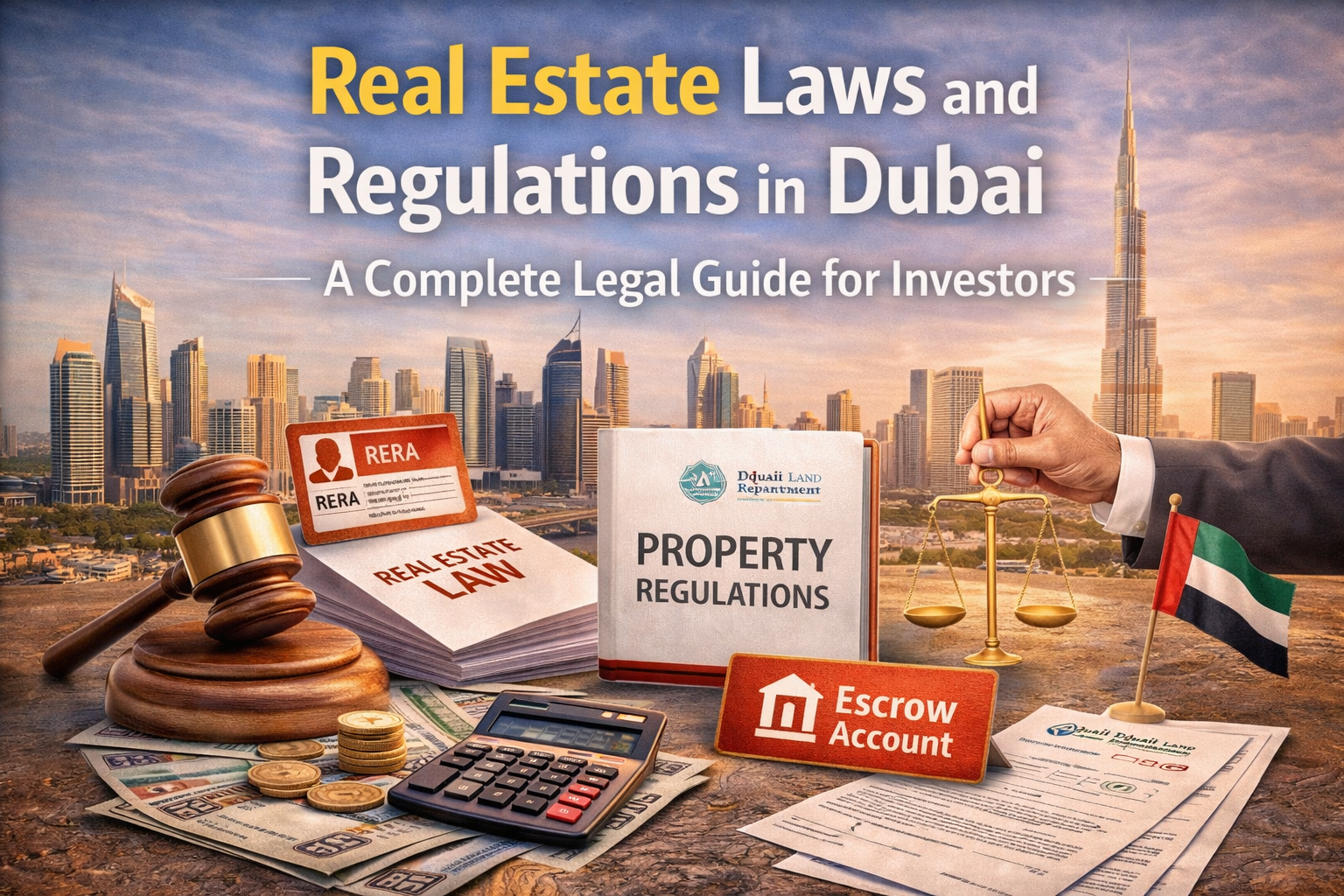
Real Estate Laws and Regulations in Dubai – A Complete Legal Guide for Investors
Dubai is one of the few cities in the world that has a very strong, transparent and well-organized legal system for real estate investment. This is why investors from all over the world are attracted to the Dubai property market. However, it is not enough to just see the profit opportunities, it is equally important to understand the real estate laws and regulations of Dubai.
Many new investors ignore the legal aspects, which can lead to problems, delays or financial losses later. This blog explains in detail the important laws, regulatory bodies, and legal obligations related to buying, holding, renting and selling property in Dubai.
Real Estate Regulatory Bodies in Dubai
1. Dubai Land Department (DLD)
The Dubai Land Department is the largest and central body in the real estate sector, overseeing the following:
- Property registration
- Transfer of ownership
- Protection of legal records
- Protection of investors’ rights
Every property transaction is legally required to be registered with DLD.
2. Real Estate Regulatory Agency (RERA)
RERA operates under the Dubai Land Department and oversees the following:
- Registration of real estate agents
- Supervision of developers
- Rules for off-plan projects
- Rent and tenant laws
RERA aims to maintain transparency and balance in the market.
Property Laws for Foreigners in Dubai
Freehold Property Laws
Foreign investors in Dubai can buy property in designated freehold areas, where they get:
- Full ownership
- Right to sell and rent
- Inheritance facility
Legal limitations
Foreigners:
- Can only buy in approved freehold areas
- Limited rights in leasehold areas
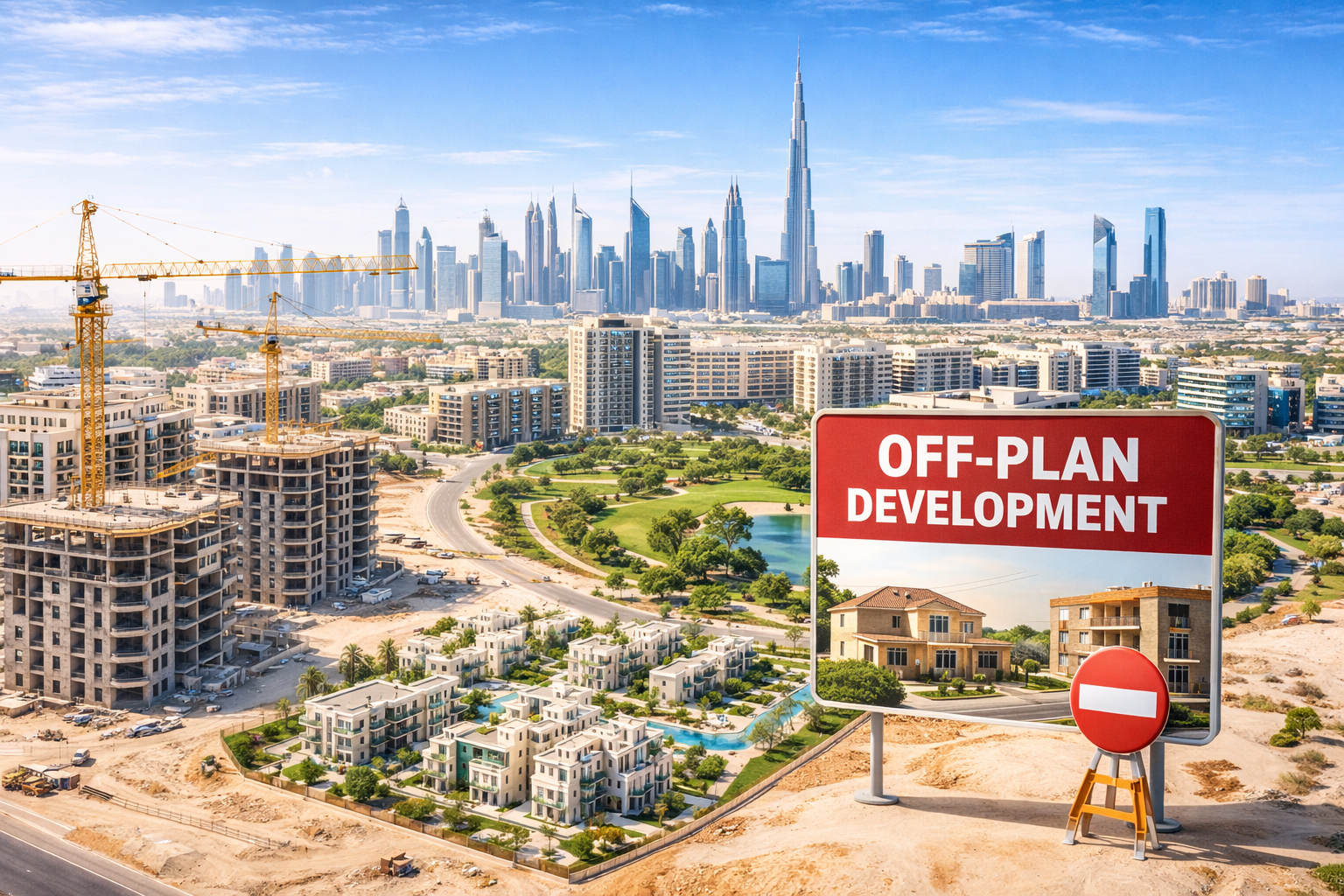
Laws related to off-plan property
Off-plan property is one that is under construction.
Key legal points
- Developer must be registered with RERA
- Buyer payments go into an Escrow Account
- Developer can only use funds for the construction of the project
- This system is designed to protect investors from fraud.
What is an Escrow Account?
Escrow Account is a secure bank account:
- In which buyers’ money is deposited
- Under the supervision of the government
- The developer cannot use the money at will
This law makes Dubai’s property market safer than other countries.
Tenancy Laws
Rent Agreement (Ejari)
In Dubai, every rental agreement must be registered through Ejari.
Advantages of Ejari:
- Legal protection
- The rights of both the tenant and the landlord are protected
- Evidence in case of disputes
Rent increase laws
Rent increase:
- According to RERA Rental Index
- The landlord cannot be arbitrary
- The notice period is fixed
These laws protect tenants from unnecessary burdens.
Legal Requirements for Selling Property
Verification of Ownership
Before the sale:
- Title Deed should be clear and correct
- There should be no legal dispute
In case of mortgage
- If there is a loan on the property:
- No Objection Certificate from the bank is required
- Loan payment or settlement is required
Penalties and violations related to property
Some common legal violations:
- Unregistered rental agreement
- Illegal subletting
- Short-term rental without permission
These may result in fines or legal action.
Investor Rights and Protection
Dubai laws provide investors with the following protections:
- Transparent registration system
- Escrow laws
- Complaints system through RERA and DLD
- Special courts for legal disputes
Resolution of real estate disputes in Dubai
If a dispute arises:
- RERA Rental Dispute Center
- Dubai Courts
- Legal mediation
The issue can be resolved.
Common Mistakes Investors Make Legally
- Buying Through an Unregistered Agent
- Signing Without Reading the Agreement
- Not Getting Ejari Registered
- Illegal Rental Activities
- Ignoring Escrow Laws
Legal Advice for Investors
- Always Choose a RERA Registered Agent
- Keep Every Document Written and Registered
- Stay Abreast of Changes in Laws
- Don’t Hesitate to Seek Advice from a Legal Advisor
Frequently Asked Questions (FAQs)
1. Can Foreigners Become Full Owners of Property in Dubai?
Yes, in Freehold Areas.
2. Is Off-Plan Property Safe?
Yes, Provided the Developer is RERA Registered.
3. Why is Ejari Necessary?
It is necessary for legal protection and dispute resolution.
4. Can the rent increase every year?
No, only as per the RERA Rental Index.
5. Is short-term rental legal?
Only with a license and permit.
6. Why is an Escrow Account necessary?
It protects the buyer’s money.
7. Can a property be sold with a mortgage?
Yes, but bank clearance is required.
8. Can a property be inherited?
Yes, especially a freehold property.
9. Is there a property tax in Dubai?
There is no annual property tax, but there are fees and charges.
10. Where are legal disputes resolved?
At the Rental Dispute Center or Dubai Courts.
The real estate laws in Dubai are designed to ensure investor protection, transparency and confidence. If you invest by understanding and following these laws, not only will you be protected from legal problems, but your investment will also prove to be more stable and profitable.