Investing in Off-Plan Property in Dubai – Complete Guide, Benefits, Risks and Strategies Introduction

Dubai’s real estate market holds a huge attraction for investors from all over the world, and Off-Plan Property plays a major role in it. Off-plan property is one that is either under construction or has not yet started construction, and the investor buys it at an early stage.

Many investors prefer off-plan property because it offers lower purchase prices, easy payment plans, and higher profit potential. However, it also comes with some risks that cannot be ignored.

In this detailed blog, we will understand all the aspects of off-plan property so that you can make a safe and profitable investment decision.

What is off-plan property?

Off-plan property is a property that:

is currently under construction

or is still in the planning and design stages

The investor buys the property before it is completed, and is usually priced below market value.

Why is off-plan property popular in Dubai?

1. Low initial cost

Off-plan property is usually priced lower than ready-made properties, allowing investors to enter even on a tighter budget.

2. Easy Payment Plans

Developers offer a variety of flexible payment plans:

  • Payment in installments
  • Post-handover plan
  • Low down payment

This facility is very attractive to investors.

3. Potential for higher capital appreciation

Since the property is purchased at an early stage:

  • Price may increase by the time of completion
  • Can benefit from market developments

4. Modern amenities and design

Off-plan projects come with modern technology, infrastructure and amenities:

  • Smart home features
  • Modern community planning
  • Better location

Risks of off-plan properties

1. Delay in delivery

The completion of the project may be delayed, which:

  • Makes the investor wait
    May reduce the expected profit

2. Market volatility

The market situation may change by the time the property is completed:

  • The price may increase
    or decrease

3. Developer risk

If the developer is not reputable:

  • The project may stall
    The quality may be affected
    Legal considerations for off-plan properties in Dubai
    Escrow Account System

Every off-plan project in Dubai Escrow Account is mandatory for:

  • Buyer’s money is safe
  • Developer can use it only for construction
  • RERA Registration

Developer must be registered with RERA:

  • Unregistered projects are illegal
  • Investor is protected

Step-by-step guide to buying an off-plan property

Step 1: Research
Location
Developer’s reputation
Market trends

Step 2: Property selection
Size
Layout
Community features

Step 3: Booking and down payment
Signing the booking form
Paying the initial amount

Step 4: Sale and Purchase Agreement (SPA)
Read all the terms
Understanding the payment schedule

Step 5: Payment and construction process
Paying installments
Monitoring the construction progress

Step 6: Handover
Property inspection
Transfer of ownership

Comparison of off-plan and ready property

Aspects of off-plan ready property
Low price High
Income Not Immediate Immediate Rental
Risk High
Low
Appreciation More Possible Limited

Best Strategy for Investors

  • Choose a reputable developer
  • Focus on location
  • Think long term
  • Understand the payment plan
  • Analyze market trends

Common Mistakes to Avoid

  • Buying without research
  • Only looking at the low price
  • Ignoring the developer’s reputation
  • Not understanding the payment schedule
  • Underestimating market risks

Is off-plan property suitable for every investor?

Suitable if:
You are a long-term investor
Immediate income is not necessary
You can tolerate the risk
Not suitable if:
You want immediate rental income
You want low risk

Frequently Asked Questions (FAQs)

1. What is an off-plan property?
A property that is under construction or in the planning stage.

2. Is an off-plan property safe?
Yes, if the developer is RERA registered.

3. Does it have high returns?
Yes, especially on appreciation.

4. Is there immediate rent?
No, after completion.

5. What is an Escrow Account?
A secure account where the buyer’s money is held.

6. Can there be a delay in delivery?
Yes, in some cases.

7. Can foreigners buy?
Yes, in freehold areas.

8. Is payment in installments?
Yes, in most projects.

9. Is resale possible?
Yes, but with conditions.

10. Is it suitable for beginners?
Yes, if you do your research.


Off-plan property investment in Dubai offers a great opportunity, especially for investors who want long-term returns. However, it is very important to understand the risks involved and do proper research. Off-plan property can multiply your investment if you proceed with the right strategy.

Real Estate Laws and Regulations in Dubai

Real Estate Laws and Regulations in Dubai – A Complete Legal Guide for Investors

Dubai is one of the few cities in the world that has a very strong, transparent and well-organized legal system for real estate investment. This is why investors from all over the world are attracted to the Dubai property market. However, it is not enough to just see the profit opportunities, it is equally important to understand the real estate laws and regulations of Dubai.

Many new investors ignore the legal aspects, which can lead to problems, delays or financial losses later. This blog explains in detail the important laws, regulatory bodies, and legal obligations related to buying, holding, renting and selling property in Dubai.

Real Estate Regulatory Bodies in Dubai

1. Dubai Land Department (DLD)

The Dubai Land Department is the largest and central body in the real estate sector, overseeing the following:

  • Property registration
  • Transfer of ownership
  • Protection of legal records
  • Protection of investors’ rights

Every property transaction is legally required to be registered with DLD.

2. Real Estate Regulatory Agency (RERA)

RERA operates under the Dubai Land Department and oversees the following:

  • Registration of real estate agents
  • Supervision of developers
  • Rules for off-plan projects
  • Rent and tenant laws

RERA aims to maintain transparency and balance in the market.

Property Laws for Foreigners in Dubai

Freehold Property Laws

Foreign investors in Dubai can buy property in designated freehold areas, where they get:

  • Full ownership
  • Right to sell and rent
  • Inheritance facility

Legal limitations

Foreigners:

  • Can only buy in approved freehold areas
  • Limited rights in leasehold areas

Laws related to off-plan property

Off-plan property is one that is under construction.

Key legal points

  • Developer must be registered with RERA
  • Buyer payments go into an Escrow Account
  • Developer can only use funds for the construction of the project
  • This system is designed to protect investors from fraud.

What is an Escrow Account?

Escrow Account is a secure bank account:

  • In which buyers’ money is deposited
  • Under the supervision of the government
  • The developer cannot use the money at will

This law makes Dubai’s property market safer than other countries.

Tenancy Laws

Rent Agreement (Ejari)

In Dubai, every rental agreement must be registered through Ejari.

Advantages of Ejari:

  • Legal protection
  • The rights of both the tenant and the landlord are protected
  • Evidence in case of disputes

Rent increase laws

Rent increase:

  • According to RERA Rental Index
  • The landlord cannot be arbitrary
  • The notice period is fixed

These laws protect tenants from unnecessary burdens.

Legal Requirements for Selling Property

Verification of Ownership

Before the sale:

  • Title Deed should be clear and correct
  • There should be no legal dispute

In case of mortgage

  • If there is a loan on the property:
  • No Objection Certificate from the bank is required
  • Loan payment or settlement is required

Penalties and violations related to property

Some common legal violations:

  • Unregistered rental agreement
  • Illegal subletting
  • Short-term rental without permission

These may result in fines or legal action.

Investor Rights and Protection

Dubai laws provide investors with the following protections:

  • Transparent registration system
  • Escrow laws
  • Complaints system through RERA and DLD
  • Special courts for legal disputes

Resolution of real estate disputes in Dubai

If a dispute arises:

  • RERA Rental Dispute Center
  • Dubai Courts
  • Legal mediation

The issue can be resolved.

Common Mistakes Investors Make Legally

  • Buying Through an Unregistered Agent
  • Signing Without Reading the Agreement
  • Not Getting Ejari Registered
  • Illegal Rental Activities
  • Ignoring Escrow Laws

Legal Advice for Investors

  • Always Choose a RERA Registered Agent
  • Keep Every Document Written and Registered
  • Stay Abreast of Changes in Laws
  • Don’t Hesitate to Seek Advice from a Legal Advisor

Frequently Asked Questions (FAQs)

1. Can Foreigners Become Full Owners of Property in Dubai?

Yes, in Freehold Areas.

2. Is Off-Plan Property Safe?

Yes, Provided the Developer is RERA Registered.

3. Why is Ejari Necessary?

It is necessary for legal protection and dispute resolution.

4. Can the rent increase every year?

No, only as per the RERA Rental Index.

5. Is short-term rental legal?
Only with a license and permit.

6. Why is an Escrow Account necessary?
It protects the buyer’s money.

7. Can a property be sold with a mortgage?
Yes, but bank clearance is required.

8. Can a property be inherited?
Yes, especially a freehold property.

9. Is there a property tax in Dubai?
There is no annual property tax, but there are fees and charges.

10. Where are legal disputes resolved?
At the Rental Dispute Center or Dubai Courts.

The real estate laws in Dubai are designed to ensure investor protection, transparency and confidence. If you invest by understanding and following these laws, not only will you be protected from legal problems, but your investment will also prove to be more stable and profitable.

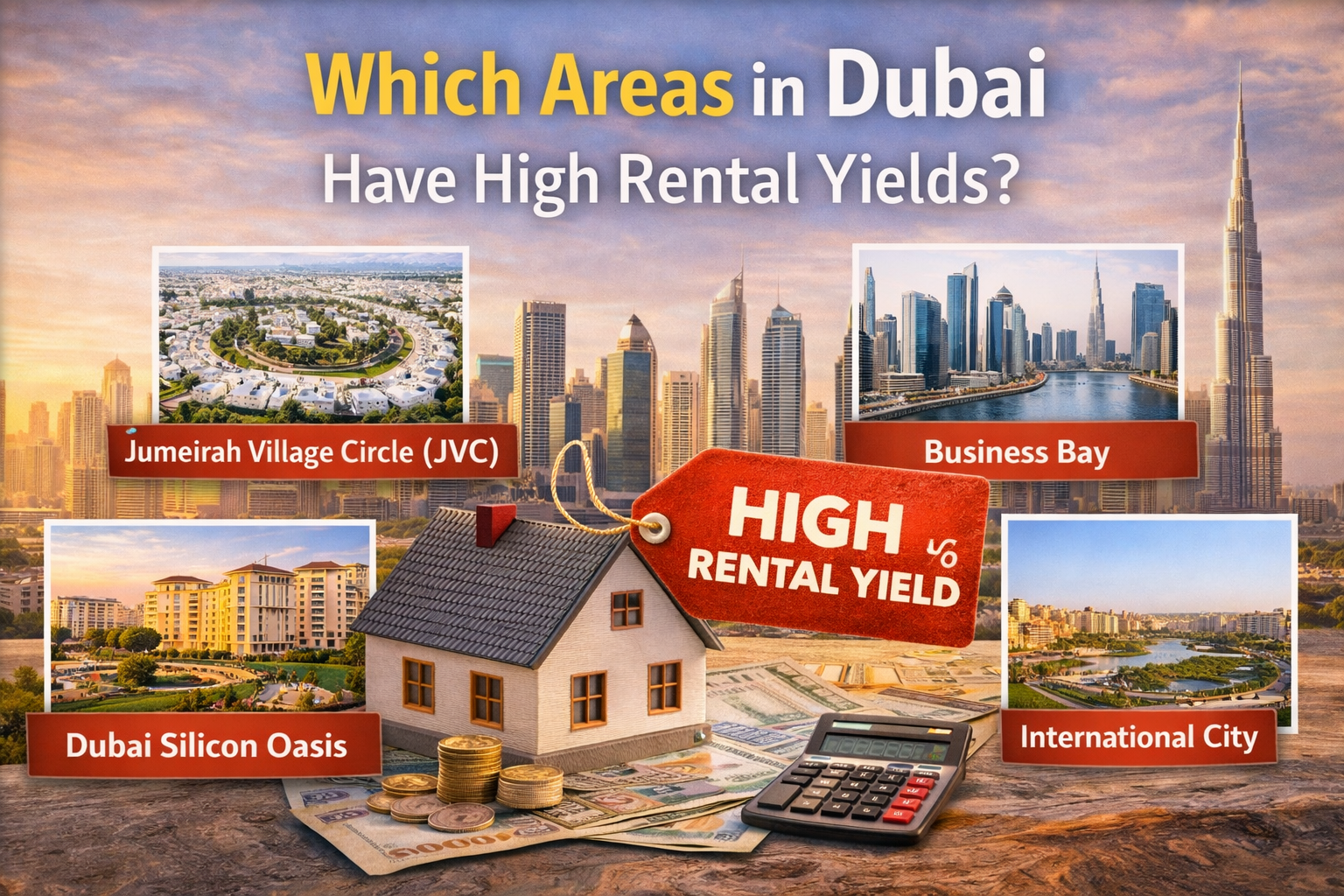
Which areas in Dubai have high rental yields?

There are some areas in Dubai that have high rental demand, which leads to better rental yields:

  • Jumeirah Village Circle (JVC)
  • International City
  • Dubai Silicon Oasis
  • Business Bay (small units)

These areas are known for:

  • Affordable properties
  • Persistent tenants
  • Good cash flow

Which areas in Dubai have high capital appreciation?

Capital appreciation is generally higher in premium and developing areas:

  • Downtown Dubai
  • Dubai Marina
  • Palm Jumeirah
  • Dubai Hills Estate

These areas:

  • Limited supply
  • Strong infrastructure
  • Global demand
  • Provide long-term returns.

Off-Plan Property and Appreciation

Off-Plan properties have a higher potential for capital appreciation because:

  • The initial cost is lower
  • The value can increase by handover
  • New amenities are included

However, they do not yield an immediate rental yield.

Don’t ignore rental property costs

It is not enough to look at rental yield alone, but also include these costs:

  • Service charges
  • Maintenance
  • Vacancy
  • Agent fees

These all affect the Net Rental Yield.

Which model is best for you?

Rental yield is better if:

  • You want monthly income
  • You have to pay mortgage payments
  • You want low risk

Capital appreciation is better if:

  • You are a long-term investor
  • You don’t need immediate income
  • You can tolerate market fluctuations

Best strategy: A combination of both

Smart investors often choose properties that:

  • Also provide a decent rental yield
  • Also increase in value over time

For example:

  • 1-bedroom apartment in Dubai Marina
  • Near-metro unit in Business Bay

Common mistakes to avoid

  • Judging by rental yield alone
  • Overestimating capital appreciation
  • Not including expenses
  • Ignoring the importance of location
  • Unclear investment objective

Practical advice for investors

  • Define your objective first
  • Research on location and property type Do
  • View long-term data
  • Calculate ROI realistically
  • Diversify across multiple properties

Frequently Asked Questions (FAQs)

1. Are rental yields really good in Dubai?

Yes, in some areas rental yields are much better by global standards.

2. Which property is better for rental?
Studio and 1-bedroom apartments generally offer better rents.

3. Is capital appreciation guaranteed?

No, it depends on the market and location.

4. Who is off-plan property better for?

Long-term investors.

5. Can both benefits be combined?

Yes, in the right location.

6. Can foreign investors benefit from both models?

Yes, fully permitted in freehold areas.

7. What are the possible reasons for low rental yields?
Higher service charges and low rent demand.

8. Is short-term rental more profitable?
In some areas, but legal permission is required.

9. What is the most common mistake in ROI calculations?
Not including expenses.

10. Which is better for a new investor?
Stable location with moderate rental yields.


Both rental yields and capital appreciation are important investment strategies in Dubai, but choosing one depends on your objective, budget and risk tolerance. With accurate information, realistic calculations and long-term thinking, you can make a successful property investment in Dubai.

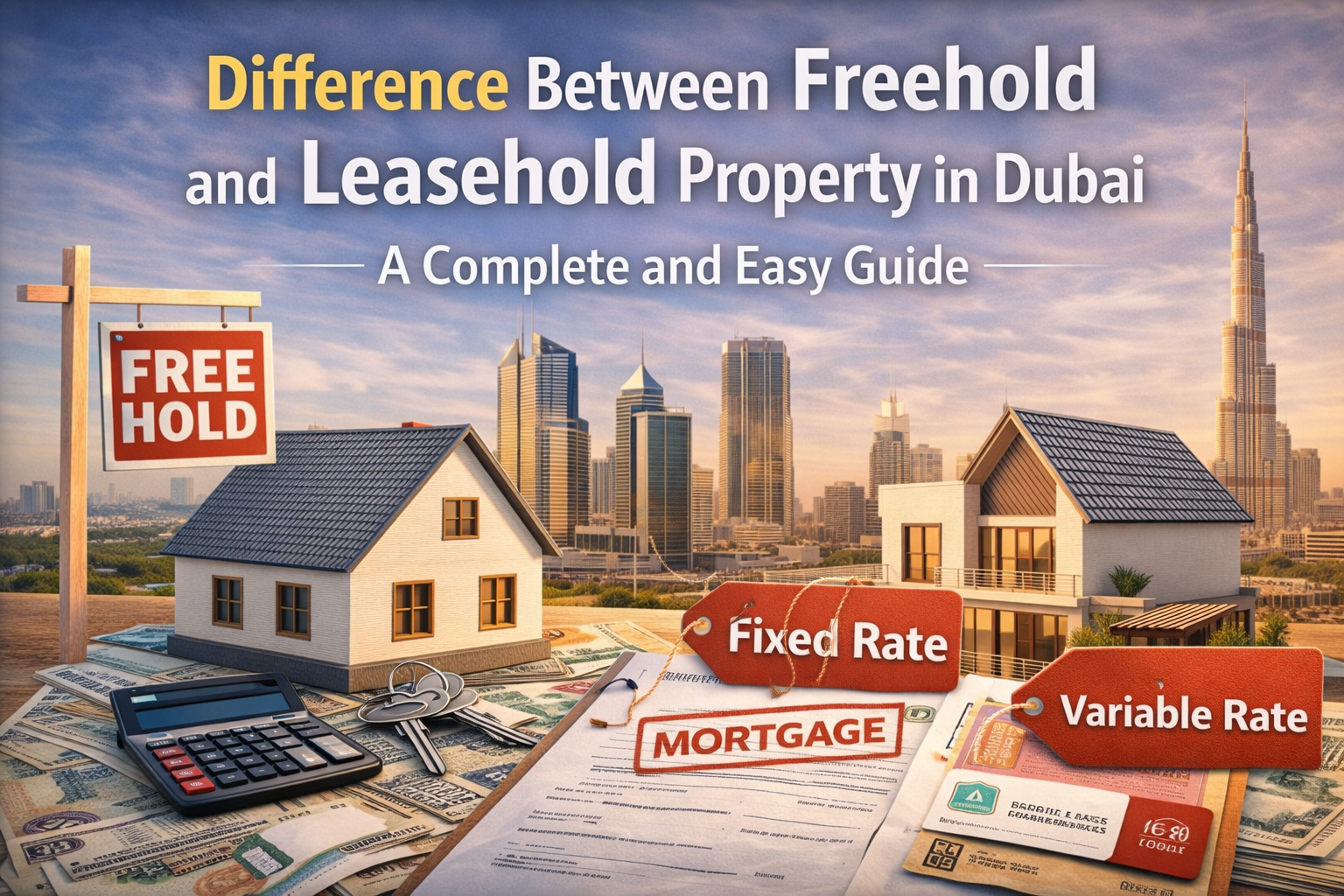
Difference Between Freehold and Leasehold Property in Dubai

Difference Between Freehold and Leasehold Property in Dubai – A Complete and Easy Guide

One of the most important and fundamental questions when buying a property in Dubai is whether freehold property is better or leasehold? Many buyers and investors make a decision without fully understanding the two terms, which can result in legal, financial and investment-related issues later on.

This blog will explain the difference between freehold and leasehold property in Dubai, their advantages and disadvantages, legal aspects, investment implications and help you decide which option is better for you.

What is a freehold property?

A freehold property is a property in which the buyer gets full ownership. It:

  • Includes ownership of both the land and the building
  • The buyer can sell, rent or transfer the property
  • There is no time limit on ownership

Freehold property in Dubai was introduced specifically for foreign investors to promote global investment.

Benefits of freehold property in Dubai

1. Full ownership

With freehold, you own the property outright, which provides long-term security and confidence.

2. Better investment opportunities

  • Higher resale value
  • Higher potential for capital appreciation

3. Freedom to rent out

You can use the property for:

  • Long-term rental
  • Short-term or holiday rental

4. Suitable for foreign buyers

Most of Dubai’s popular investment areas are freehold, such as:

  • Dubai Marina
  • Downtown Dubai
  • Palm Jumeirah
  • Jumeirah Village Circle (JVC)

Potential disadvantages of freehold property

  • Initial capital may be high
  • Service charges and maintenance costs
  • The impact of market fluctuations

However, these disadvantages are relatively less noticeable in long-term investments.

What is a leasehold property?

In a leasehold property, the buyer gains ownership of the property for a limited period of time, which is usually:

30 years

50 years

or 99 years

After the lease term is complete, ownership can revert to the original owner of the land, unless the agreement is renewed.

Advantages of leasehold property in Dubai

1. Lower initial cost

A leasehold property is usually cheaper than a freehold.

2. Suitable for a limited budget

For buyers who want to buy a property in Dubai on a limited budget, leasehold may be an option.

3. Suitable for residential use

Some people buy property only for residence rather than investment, where leasehold may be acceptable.

Disadvantages of leasehold property

  • No full ownership
  • Resale value may be limited
  • Difficulties in bank financing
  • Less attractive to foreign buyers

All these factors make leasehold less suitable for investment.

Comparative review of freehold and leasehold

Aspect Freehold Property Leasehold Property
Ownership Full ownership of the property and land Ownership for a limited period (usually 30–99 years)
Ownership Duration Unlimited Fixed-term lease
Eligibility for Foreign Buyers Fully allowed in designated areas Limited, depends on location and agreement
Investment Potential High (better capital appreciation) Moderate to low
Rental Rights Full freedom to rent short-term or long-term Subject to lease agreement conditions
Resale Value Generally higher Limited resale potential
Mortgage Availability Easily available Limited or restricted
Long-Term Security Strong long-term ownership security Ends when lease term expires
Best For Long-term investors and rental income seekers Short-term residence or budget buyers

Which is better from an investment perspective?

If your goal is:

  • Long-term investment
  • Rental income
  • Future sale

, then a freehold property is a better choice.

If the goal is:

  • Limited-term residence
  • Property on a budget

, then leasehold may be an option, but thorough research is essential.

Legal aspects to consider

1. Terms of the contract

  • Lease term
  • Renewal terms
  • Rent and usage permission

2. Registration

Register the property with the Dubai Land Department

Verify all legal documents

3. Inheritance and transfer

Inheritance is easier in freehold property, while in leasehold, contractual limitations apply.

Popular Freehold and Leasehold Areas in Dubai

Freehold Areas

  • Dubai Marina
  • Downtown Dubai
  • Business Bay
  • Palm Jumeirah
  • Dubai Hills Estate
  • JVC

Leasehold Areas

  • Parts of Deira
  • Specific Areas of Bur Dubai

Common Mistakes to Avoid

  • Not Understanding the Difference Between Freehold and Leasehold
  • Not Carefully Reviewing Legal Documents
  • Ignoring Future Plans
  • Judging Based on the Lowest Price

Practical Tips for Buyers

  • Always Be Clear About Your Investment Objective
  • Consult a Legal Advisor or Property Expert
  • Invest in Authentic and Registered Properties Only
  • Calculate Long-Term ROI

Frequently Asked Questions (FAQs)

Can Foreigners Buy Leasehold Properties in Dubai?

Yes, but the terms and duration may be limited.

Can a Golden Visa be Obtained on a Freehold Property?

Freehold property of a certain value is eligible for a Golden Visa.

Can a leasehold property be sold?

In some cases, it is possible, but subject to the terms of the agreement.


When choosing between freehold and leasehold property in Dubai, it is important to be well informed and think long-term. Freehold property is a safer and more profitable investment, while leasehold may be worth considering in limited circumstances. The right decision depends on your financial goals, budget, and future plans.

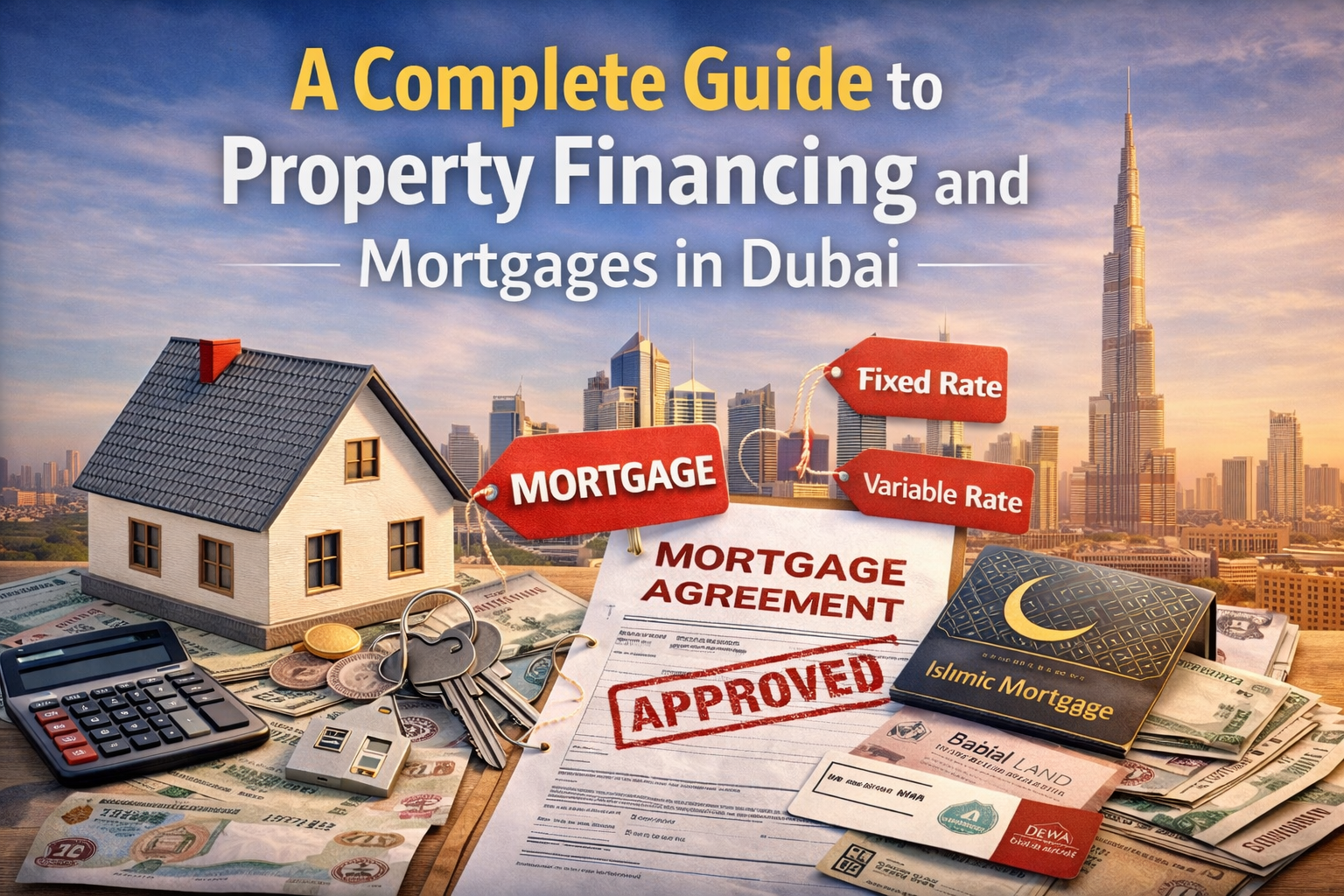
A Complete Guide to Property Financing and Mortgages in Dubai

Buying a property in Dubai is a major financial investment, and it is not possible for every buyer to pay the entire amount at once. That is why the property financing and mortgage system in Dubai is very well-organized and popular. Whether you are buying a property for the first time or an experienced investor, it is very important to understand the principles of mortgage and financing.

This detailed blog will shed light on all aspects of property financing in Dubai, including mortgage types, eligibility, costs, bank requirements, and common mistakes, so that you can make an informed and safe decision.

What is property financing?

Property financing refers to the financial facility through which a buyer purchases a property by obtaining a loan from a bank or financial institution. This loan is usually called a mortgage, which is repaid in installments over a specified period.

The mortgage system in Dubai is transparent, regulated and in line with international standards, which is monitored by relevant government agencies.

Types of mortgages in Dubai

1. Fixed rate mortgage

In this type of mortgage:

  • The interest rate is fixed for a specific period
  • The monthly installment does not change
  • Budget planning is easy

This mortgage is suitable for those who want financial stability and advance planning.

2. Variable rate mortgage

In this:

  • The interest rate can be lower or higher according to the market
  • The installments can be changed

This mortgage may initially provide a lower interest rate, but it also involves risk in the future.

3. Islamic Mortgage (Shariah-Compliant Financing)

Dubai also has an Islamic banking system, in which:

  • Financing is based on profit rather than interest
  • Contracts are made in accordance with Sharia principles

This financing is suitable for individuals who want to invest in accordance with Islamic principles.

Eligibility Criteria for Mortgage

1. Age

Minimum age: 21 years

Maximum age (at completion of mortgage): Generally 60 to 65 years

2. Income

  • Minimum monthly income varies by bank
  • Stable and verifiable income is required

3. Employment or business

  • Permanent employment or registered business
  • Employment period is usually at least 6 months

Down Payment

Residents: At least 20% of the property value

Non-Residents: Generally 30% or more

The higher the down payment, the lower the mortgage amount and the lower the interest.

Key Mortgage-Related Costs

1. Processing Fee

The bank’s fee for processing the mortgage

Usually 1% of the loan amount

2. Valuation Fee

The bank checks the market value of the property

The fee is usually a few thousand dirhams

3. Mortgage Registration Fee

0.25% of the loan amount

For registration with the Dubai Land Department

Step-by-step process for getting a mortgage

Step 1: Pre-approval

The bank reviews your income and eligibility

You get an idea of ​​how much you can borrow

Step 2: Property Selection

The bank only gives mortgages on approved and legal properties

Step 3: Final Approval

Checking all documents

Valuation and agreement

Step 4: Transfer and registration

The property is transferred to your name

Mortgage is registered

Mortgage and ROI Related

Buying a property through a mortgage:

  • The initial investment seems low
  • ROI can be better
  • But interest and expenses can affect profits

That is why it is important to calculate Rental Yield and Total ROI when taking a mortgage.

Common mistakes made when taking a mortgage

  • Borrowing more than you can afford
  • Not comparing interest rates
  • Ignoring hidden fees
  • Miscalculating the burden of installments
  • Not reading the terms of the contract carefully

Important tips before taking a mortgage

  • Compare offers from different banks
  • Understand the pros and cons of fixed and variable rates
  • Make long-term financial planning
  • Consult an expert financial advisor

Frequently asked questions (FAQs)

Can foreigners take a mortgage in Dubai?

Yes, but the down payment and terms can be strict.

How long is the mortgage term?
Typically 15 to 25 years.

Is a mortgage available on off-plan property?

Some banks provide mortgages on specific off-plan projects.


Property financing and mortgages in Dubai are an effective means through which you can buy the best property even with limited capital. However, it requires thorough research, proper planning and financial responsibility. If you take out a mortgage after understanding all the terms and costs, it can make your investment very profitable.

How to Sell Property in Dubai: A Step-by-Step Guide

Buying and selling property in Dubai is a structured, transparent and legal process, but despite this, many property owners face difficulties when selling their property. Some people fail to set the right price, some are unaware of the legal steps, while others ignore the market situation, which can result in a delay in the property sale or financial loss.

This detailed blog explains all the steps, legal requirements, costs, marketing strategies and common mistakes of selling property in Dubai so that you can sell your property safely, quickly and profitably.

Preparation before selling property in Dubai

1. Understanding the market situation

Before selling a property, it is important to know which direction the market is currently heading.

Is the market in favor of buyers or sellers?

What have been the prices of recent properties sold in this area?

Is there high demand or supply?

A proper market analysis helps you set a realistic price.

2. Setting the right price

The most common mistake is to price the property too high.

High price = low interest

Low price = financial loss

When setting the price, consider the following factors:

  • Location
  • Condition of the property
  • Size and layout
  • Building or community amenities
  • Recent market trends

Legal requirements for selling the property

3. Title Deed

The most important document for selling a property is the Title Deed.

The Title Deed should be original and in your name

There should be no legal encumbrances or disputes

4. If the property is mortgaged

If there is a bank loan on the property:

  • First obtain a No Objection Certificate (NOC) from the bank
  • The remaining loan payment or settlement is required

This step can take time, so it is important to prepare in advance.

5. Dubai Land Department (DLD) Requirements

  • The sale of the property is completed through the Dubai Land Department.
  • All documents must be updated in the DLD records
  • The sale process is completed in the registered trustee office

Selling through a real estate agent

6. Choosing an agent

Choosing the right agent can make the sale process faster and safer.

  • Characteristics of a good agent:
  • RERA registered
  • Local market experience
  • Transparent commission structure
  • Clear marketing plan

7. Agent commission

Typically in Dubai:

  • 2% commission paid by the seller or buyer (as per the agreement)
  • All commission matters should be clear in the written agreement.

Marketing and promotion of the property

8. Preparing the property for sale

  • Cleaning and repairs
  • Improving the interior
  • Professional photographs

A good presentation makes a positive impression on the buyer.

9. Online and Offline Marketing

  • Property Portals
  • Real Estate Websites
  • Social Media
  • Agent Network
  • More exposure increases the chances of a sale.

Offer and Negotiation Stage

10. Buyer’s Offer

When the buyer makes an offer:

  • Price
  • Payment Method
  • Transfer Period

Consider all aspects.

11. Memorandum of Understanding (MOU)

When the seller and buyer agree:

  • The MOU is signed
  • This is a legally binding document
  • The process of property transfer

12. Transfer at the Trustee Office

  • Both buyer and seller are present
  • Payment and transfer of ownership are completed in the same day

13. Selling expenses

The seller may have to bear the following expenses:

Trustee fee

Agent commission

Mortgage clearance (if any)

Common mistakes made when selling a property

  • Setting an unrealistic price
  • Leaving legal documents incomplete
  • Choosing the wrong agent
  • Ignoring market timing
  • Hasting too much time in negotiations

Practical tips for making a quick and profitable sale

  • Price according to the market
  • Improve the condition of the property
  • Provide transparent information
  • Hire the services of a professional agent
  • Take the legal process seriously

Often Frequently Asked Questions (FAQs)

Can foreigners sell property in Dubai?

Yes, foreign owners can sell property outright in freehold areas.

How long does it take to sell a property?
It depends on the location, price and market conditions, usually a few weeks to a few months.

Do I have to pay taxes?
There is no capital gains tax in Dubai, but other fees may apply.


Selling property in Dubai is a structured but sensitive process. The right price, legal preparation, marketing strategy and professional guidance can make your sale a success. If you understand all the steps and proceed, you will not only save time but also be able to achieve a better profit.

Hidden Costs of Buying Property in Dubai

Hidden Costs of Buying Property in Dubai – A Complete and Detailed Guide

Buying property in Dubai may seem like a straightforward and profitable process, especially when advertisements only show the property price. However, the reality is that the actual cost of a property is not limited to the purchase price alone. Many new and even experienced investors overlook various hidden costs when buying property in Dubai, which later lead to financial stress and reduced ROI.

In this detailed blog, we will explain all the important and hidden costs that come before and after buying property in Dubai so that you can make an informed and safe investment decision.

The difference between the actual price of a property and the actual cost

When you see the price of a property, for example, 1,000,000 dirhams, this amount is only the basic purchase price. In addition, there are several legal, government, administrative and ongoing costs involved, which significantly increase the overall cost.

This is why experts always say to look at the Total Cost of Ownership, not the Price of the property.

1. Dubai Land Department (DLD) Fee

The most significant additional cost when buying a property in Dubai is the Dubai Land Department Fee.

  • This fee is usually 4% of the property price
  • It may also include some administrative charges

Example

If the property is priced at AED 1,000,000:

DLD Fee = AED 40,000

This fee is payable by the buyer and is often overlooked by first-time buyers.

2. Registration and Title Deed Charges

A Title Deed is issued to transfer ownership of the property to your name, for which there is an additional fee.

  • Apartment or Villa Specific Fees
  • Sometimes developer or transfer office charges are also included

These fees are relatively low, but still important to include in your budget.

3. Real Estate Agent Commission

If you buy a property through a real estate agent, you will typically pay:

  • 2% commission on the property price
  • VAT may also apply

Key point:

Many buyers find out about the agent commission at the last minute, which can affect their budget.

4. Valuation Fee (for Mortgage Buyers)

If you are buying a property through a bank on a mortgage, the bank will conduct a valuation of the property.

  • This fee is usually between AED 2,500 and AED 4,000
  • This fee is paid by the buyer

These costs are especially important for mortgage buyers.

5. Mortgage Registration Fees

There is an additional fee to register a property purchased through a mortgage with DLD:

  • 0.25% of the mortgage amount
  • Plus a small administration fee

This expense is often a surprise to new investors.

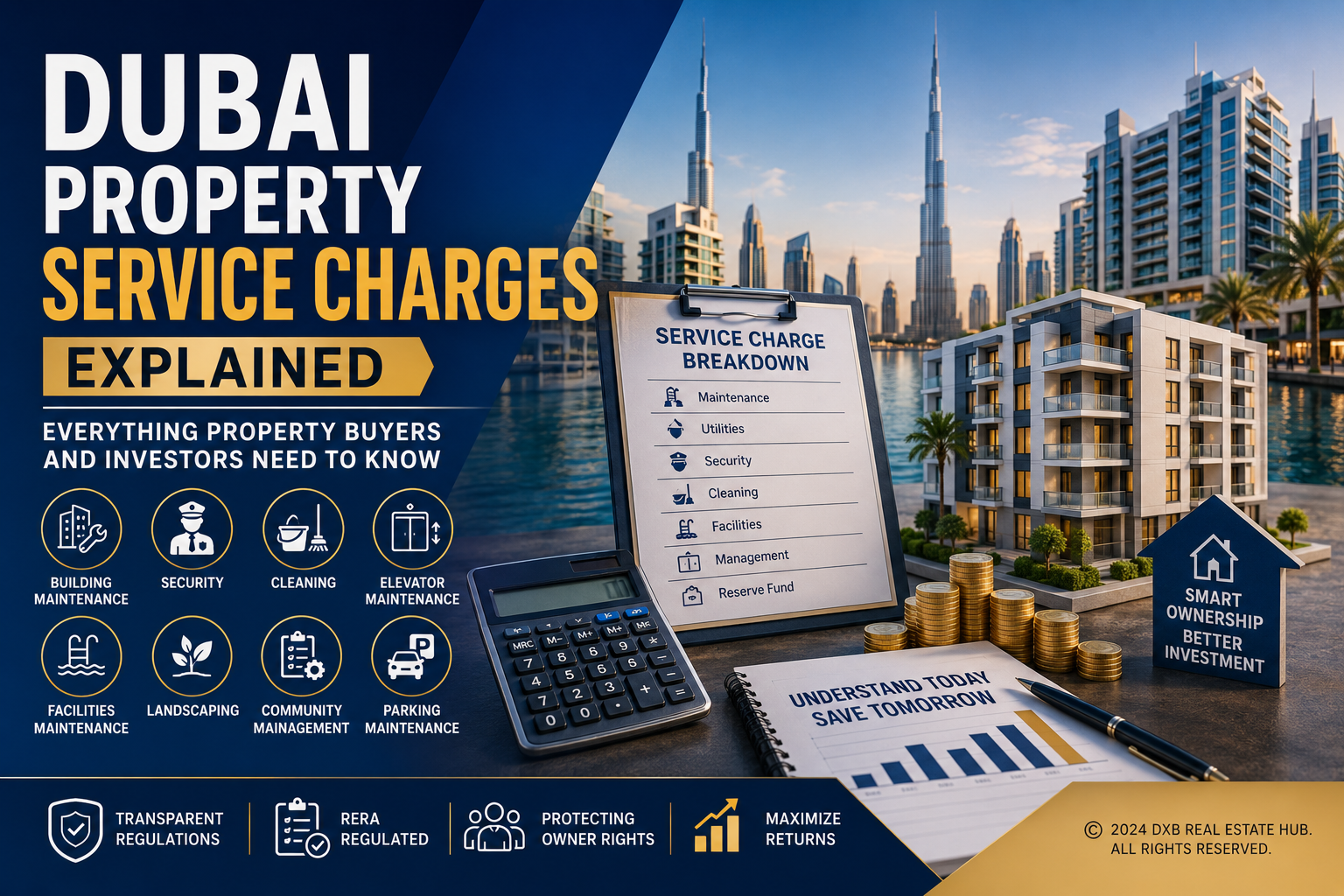
6. Service Charges

Every apartment or community in Dubai has annual service charges, which include:

  • Building maintenance
  • Security
  • Cleaning
  • Elevators and shared facilities

Key points

These charges:

  • Are per square foot
  • Can vary each year
  • Directly impact ROI

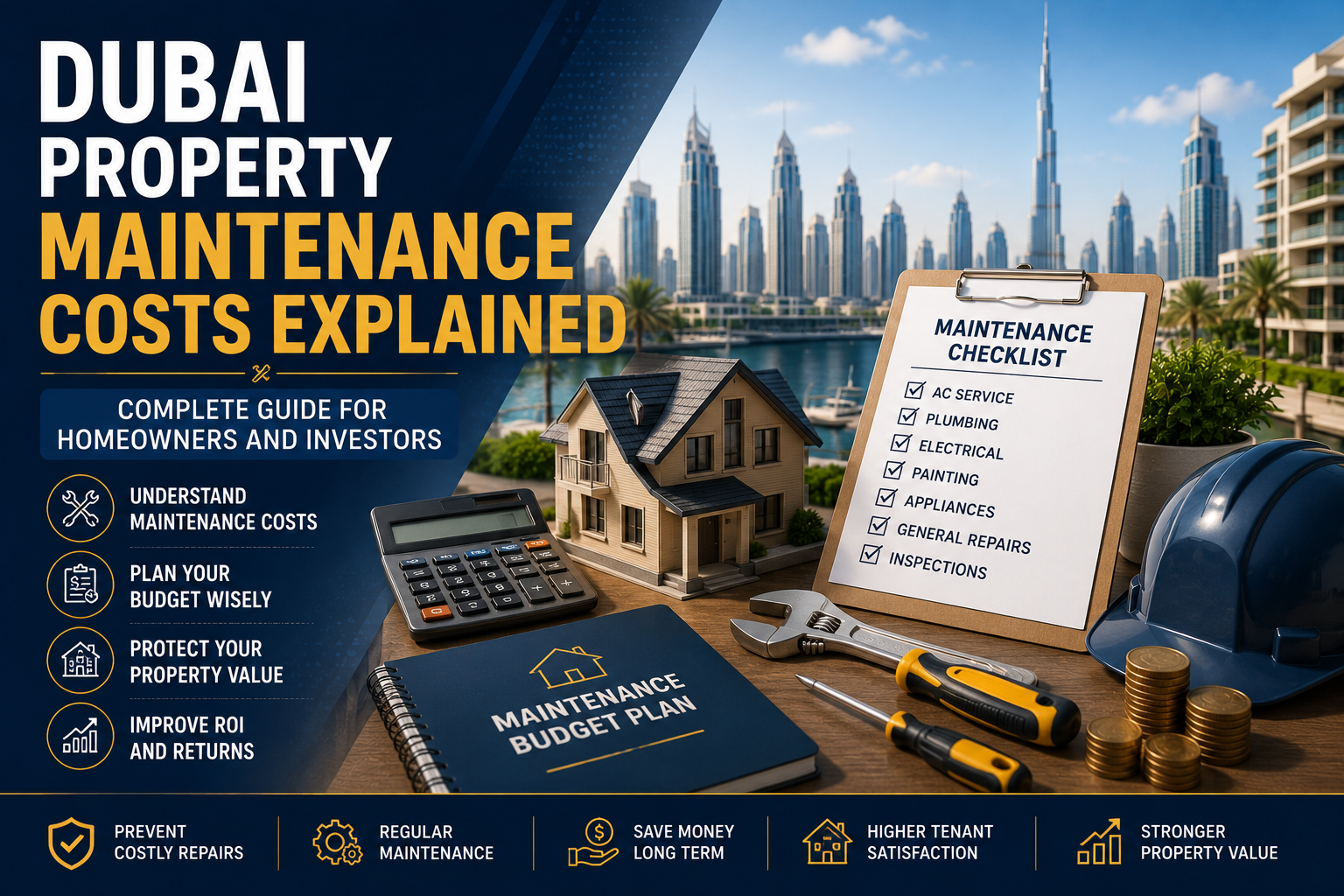
7. Maintenance and repair costs

While some repairs are included in the service charges,:

  • Internal repairs
  • Air conditioning
  • Electrical and plumbing

Most often the owner has to pay for them themselves.

These costs are especially high in ready-to-move-in properties.

8. Utility Connections and Deposits

After purchasing a property, you will have to pay deposits for the following:

  • DEWA (water and electricity)
  • Gas connection
  • Internet and telecommunications

These costs are temporary but affect the initial budget.

9. Insurance Costs

Although property insurance is not mandatory in Dubai, it:

  • Is often mandatory with a mortgage
  • Also beneficial for renting out

Insurance protects you from unexpected losses.

10. Rental-related costs

If you plan to rent out the property:

  • Ejari registration fees
  • Agent placement fees
  • Possible vacancy period

All of these factors affect your actual income.

Disadvantages of ignoring hidden costs

  • Reduced ROI
  • Unexpected financial pressures
  • Wrong investment decisions
  • Difficulties in renting or reselling

Practical ways to avoid hidden costs

  • Get a Total Cost Breakdown before buying
  • Check the history of service charges
  • Clearly understand mortgage and bank fees
  • Ask for written explanations from the agent and developer
  • Calculate the long-term ROI

Frequently asked questions (FAQs)

Is there a property tax in Dubai?

No, there is no annual property tax in Dubai, but there are service charges and other fees.

Are hidden costs the same for every property?

No, they vary by location, property type and community.

Are off-plan properties less expensive?

Some costs may be less expensive, but service charges and other fees apply in the long term.


Buying property in Dubai can be a great investment, but only if you make a decision with a full understanding of all the hidden costs. Taking into account the price of the property as well as legal, administrative and ongoing costs can save you from financial loss and make your investment truly profitable.

Top Mistakes to Avoid When Buying Property in Dubai

Common Mistakes When Buying Property in Dubai and a Complete Guide to Avoiding Them

The Dubai real estate market offers an attractive opportunity for investors from all over the world. Whether you are buying property for the first time or an experienced investor, there are several types of mistakes that can be made while investing in Dubai that can affect your returns.

This blog will alert you to these common mistakes and show you how you can make your investment safe and profitable. We will also explain the legal, financial and market aspects in detail.

Mistake No. 1: Buying property without thorough research

Many investors buy property based solely on promotions or marketing. Each area in the Dubai market offers different features and ROI.

Precaution

  • Review the demand and supply of the area
  • Check the credibility of the property type and developer
  • Analyze past price trends and future growth potential

Mistake #2: Not calculating the budget properly

A common mistake is not to calculate maintenance, service charges, registration fees, and utility bills in addition to the property price.

Precaution:

Total cost = Property Price + Fees + Service Charges + Maintenance

  • Calculate ROI based on rental or resale potential
  • Always keep an emergency fund

Mistake No. 3: Not understanding the difference between Off-Plan and Ready Properties

Off-Plan Property: Low price, delayed delivery, potential appreciation

Ready Property: Immediate rental income, slightly higher initial investment

Precaution:

  • Choose a property according to your investment goal
  • Check the developer’s track record and project timeline
  • Include a clear delivery date and penalties in the contract

Mistake No. 4: Not taking care of the developer and legal verification

Investing in an unknown developer or illegal property can be risky.

Precaution:

  • Deal only with RERA approved developers
  • Verify registration with Ejari and Dubai Land Department
  • Check property title and ownership documents

Mistake No. 5: Mistakes in loan and financing matters

Not analyzing interest rate, tenure, down payment and EMI completely

Over-leveraging

Precaution:

  • Compare multiple offers from banks and financial institutions
  • Calculate EMI and affordability properly
  • Do not commit without loan pre-approval

Mistake No. 6: Not making decisions based on market timing

Dubai’s market is affected seasonally and globally.

Buying in oversupply or economic slow-down can be detrimental

Avoid:

  • Analyze market trends and recent sales data
  • Consult expert advice or property consultant
  • Keep investment horizon long-term

Mistake No. 7: Ignorance of Legal and Rental Agreements

Transaction without Ejari registration or tenancy contract under RERA

Leaving loopholes in tenant or lease agreements

Avoid:

  • Every sale or rental agreement should be RERA approved
  • Check contracts with legal advisor
  • Thorough background check in tenant selection

Mistake No. 8: Ignoring Hidden Costs

Ignoring maintenance, insurance, service charges, community fees, etc.

Avoid:

  • Calculate total ownership cost in advance
  • Calculate amenities, security, facility fees

Mistake No. 9: Over-relying on short-term trends

Buying on short-term price fluctuations or hype Do

Over-optimistic ROI estimation

Avoid:

  • Make investment decisions based on long-term trends
  • Review market research and historical data
  • Set realistic expectations

Mistake No. 10: Ignoring Internal & External Factors

Developer reputation, community facilities, infrastructure development

Global economic conditions, visa policies and tax regulations

Avoid:

  • Do detailed due diligence
  • Diversify with an investment plan
  • Follow local news and Dubai Land Department updates

Key Tips for Safe Investment

RERA Approval – Invest only in approved properties

Location Selection – prime areas like Dubai Marina, Downtown Dubai, JVC

Budget Management – ​​total cost including hidden charges

Legal Verification – title deeds, contract, Ejari registration

Professional Advice – property consultants and legal advisors

FAQs – Frequently Asked Questions

Can foreigners buy property in Dubai?
Yes, foreign investors can buy & sell in all freehold areas.

Which is better, Off-Plan or Ready Property?

Choose according to your investment goal and risk appetite.

What is the minimum budget for investing in Dubai?

Starting from AED 500,000, depending on location and property type.

How to calculate ROI?

Rental Yield = (Yearly Rent ÷ Property Price) × 100

Capital Appreciation = (Resale Price – Purchase Price) ÷ Purchase Price × 100

Total ROI = Rental Yield + Appreciation


Buying a property in Dubai can be a great investment, but without proper research and planning, mistakes can be costly.

  • Choosing the right location and property type
  • Legal and financial verification
  • Knowledge of hidden costs and market trends
  • Professional advice and RERA approval

All these factors can make your investment safe and profitable.

Rental Property in Dubai: Complete Guide and Profit Methods

Dubai’s real estate market is not limited to buying and selling, but rental opportunities are also very attractive to investors. The most important goal of every investor is to generate consistent income from the property and maximize the ROI of the investment.

In this blog, we will fully explain how rental property in Dubai works, what are the best locations, how to calculate the profit, and how to manage the legal and financial aspects.

Types of rental property in Dubai

1. Flats and apartments

Flats are in high demand for rental in Dubai Marina, Downtown Dubai and Business Bay.

These opportunities are ideal for investors as they provide high rental yields.

2. Villas and Townhouses

Villas in Jumeirah Hills, Arabian Ranches and Dubai Hills Estate have high rental prices, especially for families.

The initial investment is high, but in the long run, it gives a stable and high ROI.

3. Off-Plan Rental Investment

Buying flats in new projects and renting them out later gives the best combination of rental income with future appreciation.

Calculating Rental Income in Dubai

Step 1: Find the annual rent

Example: If the flat is purchased for 1,500,000 AED and the annual rent is 120,000 AED

Step 2: Calculate Rental Yield

Rental Yield (%) = (Annual Rent ÷ Property Price) × 100
Example: (120,000 ÷ 1,500,000) × 100 = 8%

Step 3: Calculate Maintenance and Service Charges

Service Charges are approximately 10–15 AED per sq. ft. per year

Deduct maintenance costs to find Net ROI

Step 4: Total ROI

If you also include Capital Appreciation, then Total ROI = Rental Yield + Appreciation

Best locations for rental properties in Dubai

Dubai Marina – Luxury waterfront apartments, high tenant demand

Downtown Dubai – Landmark buildings, preferred by tourists and executives

Business Bay – Commercial + residential mix, high demand by corporate tenants

Jumeirah Village Circle (JVC) – Affordable residential options, families and long-term tenants

Dubai Hills Estate – Villas and townhouses, with premium facilities

Key points for choosing a tenant

  • Check the tenant’s background – employment verification, previous rental history
  • Lease agreement – ​​RERA approved agreement required
  • Security Deposit – Typically 5–10% of annual rent
  • Maintenance responsibilities – Clarify which maintenance responsibilities are the landlord’s responsibility

Legal and financial Aspects

Tenancy Contract: Enforceable, provided by RERA

Ejari Registration: The rental agreement must be legally registered

Taxes & Fees: There is no property tax in Dubai but service charges and registration fees apply

Ways to increase rental income

  • Furnished Apartments – furnished units bring in higher rent
  • Short-term rentals – Airbnb or vacation rentals give high rental income
  • High-demand areas – prime locations always have high demand from tenants
  • Regular maintenance – properly maintained property creates higher rent demand

Frequently Asked Questions (FAQs)

Can foreigners rent out property in Dubai?

Yes, foreign investors can easily rent out in all freehold areas.

Where is the minimum investment better?

JVC and Business Bay offer the best opportunities for a medium budget.

How to get legal protection?
Complete legal protection is available with RERA’s Ejari registration and approved tenancy contract

How can ROI be increased?

By using prime locations, furnished units and short-term rentals.

Conclusion

Property for rent in Dubai offers excellent investment opportunities.

  • Choosing the right location
  • Appropriate property type
  • Thorough legal and financial due diligence
  • Tenant selection

All these factors can maximize your rental income and total ROI.

A Complete Guide to Dubai Property ROI: How to Calculate Return on Investment

Dubai’s real estate market has always been a hot topic for global investors. But the biggest question every investor asks is, “How much will I get for my investment?” The answer is ROI, or Return on Investment.

ROI is a fundamental metric that shows how much profit you are getting for the money you have invested in a property. Whether you are buying an off-plan property, planning to rent it out, or investing in a completed property, ROI plays a central role in every decision.

What is ROI?

ROI (Return on Investment) stands for Return on Investment. In simple terms, it shows the return you get on your investment.

Formula to calculate ROI:

ROI (%) = (Annual Profit ÷ Total Investment) × 100

This formula not only tells you the current investment situation but also helps in future decision-making.

Types of ROI in Dubai Property

1. Capital Appreciation

This happens when the value of the property increases over time. For example, if you bought a flat in Dubai Marina for 1,000,000 AED and after 3 years its value has increased to 1,200,000 AED, your Capital Appreciation will be 200,000 AED.

2. Rental Yield

This is the profit you earn from renting.

Rental Yield (%) = (Annual Rent ÷ Property Price) × 100

For example:
If the property price is 1,000,000 AED and the annual rent is 80,000 AED, then:

Rental Yield = (80,000 ÷ 1,000,000) × 100 = 8%

3. Total ROI

Total ROI is obtained by combining both Capital Appreciation and Rental Yield:

Total ROI = Capital Appreciation + Rental Yield

This formula is important for every investor as it shows the total return.

Factors affecting ROI in Dubai property

1. Location

Dubai Marina, Downtown Dubai and Palm Jumeirah have both higher rents and prices.

Jumeirah Village Circle and Arabian Ranches have higher average rents and investment potential.

2. Property Type

Off-Plan: Buy at a low price, long-term appreciation

Ready: Immediate rental income, slightly higher initial investment

3. Market Conditions

The real estate market in Dubai changes rapidly.

Demand & Supply, interest rates and foreign investment policies affect ROI.

4. Developer Reputation

Investing in properties from well-known and RERA registered developers is safer and more profitable.

Practical steps for calculating ROI

  • Find the property value
  • Find the annual rent (if there is rental income)
  • Estimate the expected Capital Appreciation
  • Use the formula:
  • Rental Yield
  • Capital Appreciation
  • Total ROI
  • Analyze risks (delays, market volatility, maintenance costs)

Real example

Property: 2-bedroom flat, Dubai Marina

Price: 1,500,000 AED

Annual rent: 120,000 AED

Value after 3 years: 1,800,000 AED

Rental Yield = (120,000 ÷ 1,500,000) × 100 = 8%
Capital Appreciation = (1,800,000 – 1,500,000) ÷ 1,500,000 × 100 = 20%
Total ROI (annual) = (8% + 20% ÷ 3) ≈ 14.67% per year

This ROI shows you that your average annual return will be approximately 14.67%.

High ROI areas in Dubai

  • Dubai Marina – Luxury waterfront properties
  • Downtown Dubai – Landmarks, high rental demand
  • Business Bay – Commercial + residential mix
  • Jumeirah Village Circle (JVC) – Affordable residential, growing community
  • Dubai Hills Estate – Villas, gated communities

Tips to Maximize ROI

  • Invest early in Off-Plan
  • Analyze rental market demand
  • Calculate Maintenance & Service Charges
  • Choose a strong developer
  • Take advantage of flexible payment plans

Frequently Asked Questions (FAQs)

Can foreigners earn ROI from property in Dubai?

Yes, foreign investors can easily earn profits from rent and Capital Appreciation in all freehold areas.

How can ROI be increased?

  • Buying in the best location
  • Choosing the right property type
  • Understanding the benefits of off-plan or ready-to-move property

Where is the best place to invest?
Areas like JVC and Arabian Ranches offer high ROI on a medium budget.


Understanding ROI is essential for property investment in Dubai. A proper assessment of both Capital Appreciation and Rental Yield helps you make the best decision. With the right location, a reliable developer and market research, you can make your investment safe and profitable.